AislingCass McGuire is visited by her share of dreams, and Carmel clearly dreams too. Aisling (meaning dream - you will hear it between Acts I & II) is one of Carmel's favourite pieces. She tells the story best herself...
"I was asleep, dreaming, sometime in the middle of a summer's night: In my dream a woman was singing this beautiful air. I awoke, the melody turning in my head, and I thought: I must write that down in the morning. However, the tune had other ideas as it wouldn't let me sleep, so I stumbled downstairs to my piano and with half-opened eyes I scribbled the notes down hastily..."
The next morning, when she "properly" awoke, Carmel couldn't remember the tune at all, and wondered if everything was a dream. But, remarkably, when she got to her piano, there it was - every note written quite precisely! It was a lesson to herself to listen carefully, and act immediately when that ever happened again ... and it has ... in fact a good few of her tunes have been composed that way since - and she doesn't fight the desire to stay in bed until morning anymore! | |
Aisling (Acoustic)I was asleep, dreaming, sometime in the middle of a summer's night: In my dream a woman was singing this beautiful air. I awoke, the melody turning in my head, and I thought: I must write that down in the morning. However, the tune had other ideas as it wouldn't let me sleep, so I stumbled downstairs to my piano and with half-opened eyes I scribbled the notes down hastily... The next morning, when I "properly" awoke, I couldn't remember the tune at all, and wondered if everything was a dream. But, remarkably, when I got to the piano, there it was - every note written quite precisely! It was a lesson to me to listen carefully, and act immediately when that ever happened again... and it has ... in fact a good few of my tunes have been composed that way since - and I don't fight the desire to stay in bed until morning anymore! | |
| Away in a Manger | |
Calm GoodbyeIt is hard to say goodbye as we watch our loved ones leave, and head off on their new journey. This is some calming music to help you come to terms with missing them. | |
Can we put up the Tree?Can we put up the Tree? was inspired by my two nephews, who in their younger years, always wanted to put up the Christmas Tree early. However my sister wouldn't hear of it and spent most of November and half of December listening to their pleas.
So this is for all the children - to help them in their cause.
| |
Christmas SpinI do a 'Hydro Spin' class at the Coast Club Leisure Centre, and one of the exercises that we do is an interval sprint of 10 seconds warm up, 10 seconds on, 10 seconds off, 20 on, 20 off, 30 on, 30 off, 40 on, 40 off and all the way back down again to 10!
I find it easier when the music follows what I'm supposed to be doing! So after the poor trainer had to listen to me complaining that there was no music for their 'Interval Sprint' I decided to give the class a Christmas present! Christmas Spin is the result - listen out for the cowbells getting you ready for the sprint, the magical bells telling you it's nearly over and the groans as you move into the well earned rest. | |
ClannThis piece was inspired after we welcomed another member to the 'tribe' a few months ago. He has the same name as my father, so it's great to see the dynasty continue. | |
CosúlachtAnother new member of the Clan. | |
| Deck the Halls | |
DeoraíochtThe story of The Loves of Cass McGuire is set against the backdrop of the long-enduring Irish theme of emigration, and exile - deoraíocht. This is the title of the opening music of tonight's production.
Carmel had visited her Uncle Padraic in hospital one Sunday afternoon. She came home, sat at the piano and composed this melody. Uncle Padraic had emigrated from Ireland, like many of his countrymen, and lived his life away from "home". For Carmel, the tune seemed to encompass all he was to her, and sadly, its first public playing was at his funeral a few months later. "The title - Deoraíocht - just came to me - even though I didn't know its meaning... when I looked it up, it said "exile, or immigrant" and as my Uncle Padraic, along with my father and many of my relations had ended up in England or America, it seemed very appropriate." And it works for us too! | |
DesireThis is another of my early pieces which I composed in July 2002 when someone asked me a question about what did I truly desire in life. At that time, I had no words for them, but I sat down at the piano and this melody was born. | |
Do It Now
When you wake up from a dream and your brain tells you that you had better Do It Now! | |
Eamonn an Chnoic (traditional)At the end of the 17th century and early 18th century a Robin Hood type figure roamed the hills around West Tipperary and East Limerick. Eamonn a Chnoic or Ned of the Hills championed the cause of the poor, the dispossessed natives and continually harassed the English planters. | |
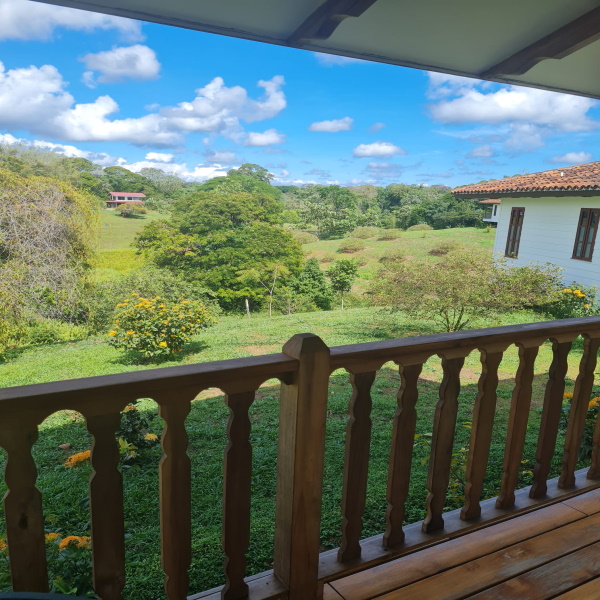
El LugarThis was inspired by my visit to the El Lugar Resort and hearing all the different birds singing outside my window. If you listen closely you can hear some of their songs within the piece. The El Lugar Resort unveils an experience of being one with nature. You are immersed in the enriched local culture and flavors of Sarapiquí and live a unique Costa Rica story in the heart of the rainforest. It transported me back to a time of peaceful harmony with our beautiful planet. | |
Eleanor Plunkett (traditional)This piece was written by Turlough O'Carolan the blind harper and composer in about 1720. The story goes that this melody would have been longer had Ms Plunkett's coach driver not scoffed at the lyrics - saying some were from other songs - O'Carolan clobbered the driver with his staff and exclaimed "neither you nor any other person will ever hear more of it but what is already composed". | |
Endearing Young CharmsIf you pass the White O’Morn Cottage in Maam or pass over the Quiet Man Bridge you might pause to remember The Quiet Man film. This next song was gently played as the newlyweds were toasted and wished all the best in their married life. It is also the first song I ever performed on the piano.
Believe Me If All Those Endearing Young Charms
Believe me if all those endearing young charms
Which I gaze on so fondly today
Were to change by tomorrow and fleet in my arms
Like fairy gifts fading away
Thou wouldst still be adored
As this moment thou art
Let thy loveliness fade as it will
And around the dear ruin each wish of my heart
Would entwine itself verdantly still.
It is not while beauty and youth are thine own
And thy cheeks unprofaned by a tear
That the fervour and faith of a soul can be known
To which time will but make thee more dear.
No, the heart that has loved never truly forgets
But as truly loves on to the close
As the sunflower turns on her God as He sets
The same look that she gave when He rose.
Music: Traditional
Lyrics: Thomas Moore | |
Endearing Young Charms (traditional)This piece of music as well as being part of the amazing film "The Quiet Man", also was part of my childhood, as it was one of the early "Irish melodies" I learnt as a daughter of Irish immigrants in London. Whenever anyone came to visit, my father was always heard to say to me - play "Endearing Young Charms". | |
From the Bed to the GraveI was lucky enough that a friend of mine, the fabulous tenor Seán Costello, agreed to record my song (new and improved version-all done over 2 counties and 3 houses!) inspired by the new reality of funerals due to this terrible pandemic. A huge thanks to my sister Angela Forde for the lyrics and unending patience! From the Bed to the Grave No jigs or reel to lead you out,
No stories told of you today,
but silent flags will wave farewell,
from the bed to the grave. We stand alone 6 feet apart,
we come to join with you in prayer,
You left your mark upon this earth,
And we still need to show we care. No jigs or reel to lead you out,
No stories told of you today,
but silent flags will wave farewell,
from the bed to the grave. Instrumental Bridge See the people stand
Lined along the road
To your journey's end
Their love for you untold
The day will come we'll meet again,
we'll hold your loved ones in our hands,
we'll laugh and cry and sympathise,
and we'll try to understand.
Chorus | |
From the HeartThe Rhapsodies (notes from the play's programme)
Instead of Wagner, the three rhapsodies of Trilbe, Ingram and Cass are
accompanied by three more of Carmel's pieces. Little did she know when
she composed them, that they would be called on to comfort three
vulnerable Friel characters in their moments of need.
From the Heart - accompanying Cass's final rhapsody - was written after
a friend who had been listening to Carmel complaining about something
said: why don't you just sit down and write a tune instead! So, she did! | |
From the HeartThis piece was composed on New Year's Eve 2005. It was written after a friend had been listening to me complaining about something and said "why don't you just sit down and write a tune instead". So, I took their advice and on a night that has interesting energy for me, this tune came from my heart. | |
Galway ShawlMy first stop on the tour is ‘The Galway Shawl’. This is usually played as a waltz but here I decided to play it as a romantic memory of a chance meeting that was never to last – or did he ever return to Galway after his trip to Donegal?
I’d like to think so.
Galway Shawl
Near Oranmore in the County Galway
One pleasant evening in the month of May,
I spied a damsel; she was young and handsome
Her beauty fair stole my heart away.
She wore no jewels nor costly diamonds
No paint or powder, no none at all
She wore a bonnet with a ribbon on it
And round her shoulder was the Galway Shawl
We kept on walking, she kept on talking
Till her father’s cottage came into view
Said she ‘Come in sir, and meet my father
And play to please him the ‘Foggy Dew’.
I played the ‘Blackbird’ and the ‘Stack of Barley’
‘Rodney’s Glory’ and the ‘Foggy Dew’
She sang each note like an Irish linnet
And the tears flowed in her eyes of blue
‘Twas early, early, all in the morning
I hit the road for old Donegal
Said she ‘Goodbye sir’, as she cried and kissed me
And my heart remained with the Galway Shawl.
Music & Lyrics: Traditional | |
Golden WaltzThis is another piece inspired by my visit to China to learn about Chinese Tea Ceremony. Another tea house I visited, "Mr Ji's Tea House" was a haven of peace and tranquillity and I hope you can get the energy of it from the music. | |
Happily Ever AfterThis piece was written when I truly began to believe that there is magic in everything and our dreams really can come true, if we choose them. | |
HealingThe Rhapsodies (notes from the play's programme)
Instead of Wagner, the three rhapsodies of Trilbe, Ingram and Cass are accompanied by three more of Carmel's pieces. Little did she know when she composed them, that they would be called on to comfort three vulnerable Friel characters in their moments of need. Healing - Ingram's solace on the "anniversary" of losing the love of his life ' was one of Carmel's first compositions - composed in Co. Clare - with no reports of German yachts fishing there at the time! | |
Healing (Acoustic)This piece was one of my earliest compositions. I wrote it in Doolin, Co Clare in June 2002 when I was going through big changes in my life and this piece seemed to soothe my soul. | |
Hold MeSome tunes don't have a story - they just do what they say when you need them most - and to Hold Me is what Cass needs most at the end of Act II... | |
| Holy Night | |
| In Dulci Jubilo | |
| In the Bleak Midwinter | |
| Joy to the World | |
Letting GoThis is another of my early pieces from July 2002. It was a time of change and even now years later it still has the message of letting go whatever doesn't work for me, in a gentle way. | |
Looking BackThe Rhapsodies (notes from the play's programme)
Instead of Wagner, the three rhapsodies of Trilbe, Ingram and Cass are accompanied by three more of Carmel's pieces. Little did she know when she composed them, that they would be called on to comfort three vulnerable Friel characters in their moments of need. Looking Back accompanies Trilbe's reminiscences of her darling Gordon McCleland. | |
Óró Mo BháidínBack to Pearse’s cottage to play a song associated with Pádraig Pearse about another traditional boat – the currach – a small fishing boat powered by the strength of the arm!
Óró Mo Bháidín
Crochfaidh mé seolta is rachaidh mé siar
Óró mo churaichín ó
‘S go hOíche Fhéil’ Eoin ní thiocfaidh mé aniar
Óró mo bháidín
Óró mo churaichín ó
Óró mo bháidín
Óró mo churaichín ó
Óró mo bháidín
Nach breá í mo bháidín ag snámh ar a’gcuan
Óró mo churaichín ó
‘S na céaslaí á dtarraingt go láidir ‘s go buan
Óró mo bháidín
Nach lúfar í ag iomramh soir agus siar
Óró mo churaichín ó
‘S a sárú ní bhfaighidh tú ó Árainn go Cliar
Óró mo bháidín
——————————————
I’ll set sail and journey west
Óró my curaichín ó
‘Til Midsummer’s night I won’t return
Óró my little boat
Óró my curaichín ó
Óró my little boat
Óró my curaichín ó
Óró my little boat
Isn’t she fine as she glides in the bay
Óró my curaichín
And the pull on the rowlocks so sturdy and strong
Óró my little boat
How swiftly she moves back and forth
Óró my curaichín ó
You’ll not find her like from Aran to Clare
Óró my little boat
Music: Tomás Mac Domhnail
Lyrics: Pádraig Pearse, Colm O Lochlainn, Tomas Ó Colmáin | |
Óró sé do bheatha abhaileAnd then I arrived in the heart of Connemara to Pearse’s Cottage. Pádraig Pearse changed the lyrics of the next song and made it about the legendary Pirate Queen- Grace O’Malley. It was a rallying call to Ireland to follow her example and refuse to submit to a foreign power.
Óró sé do bheatha abhaile
Óró, sé do bheatha abhaile,
Óró, sé do bheatha abhaile,
Óró, sé do bheatha abhaile…
Anois ar theacht an tsamhraidh
Sé do bheatha, a bhean ba léannmhar
Dob’ é ár gcreach do bheith i ngébheann,
Do dhúthaigh bhreá i seilbh méirleach,
‘S tú díolta leis na Gallaibh!
Tá Gráinne Mhaol ag teacht thar sáile,
Is Fianna Fáil ‘na mbuidhin gharda,
Gaeil féin ‘s ní Francaigh ná Spáinnigh,
Is ruagairt ar na Gallaibh!
A bhuí le Dia na bhfeart go bhfeiceam,
Muna mbímid beo ina dhiaidh ach seachtain,
Gráinne Mhaol is míle gaiscíoch
Ag fógairt fáin ar Ghallaibh.
——————————————
Óró, You’re welcome home,
Óró, You’re welcome home,
Óró You’re welcome home…
Now that summer’s coming!
Welcome, oh woman who was so afflicted,
It was our ruin that you were in bondage,
Our fine land in the possession of thieves
And you sold to the foreigners!
Grace O’Malley is coming over the sea,
Armed warriors along with her as her guard,
They are Gaels, not French nor Spanish…
And they will rout the foreigners!
May it please the King of Miracles that we might see,
Although we may live for a week once after,
Grace O’Malley and a thousand warriors…
Dispersing the foreigners!
Music: Traditional
Lyrics: Pádraig Pearse | |
Queen of ConnemaraTake a look around the area and you might see a Galway Hooker. This traditional boat was used to carry turf and other goods- like limestone and seaweed, although its main use was as a fishing vessel. Keeping with the strong female theme – boats are referred to as feminine – the next song describes one man’s love of his boat.
Queen of Connemara
Oh, my boat can safely float in the teeth of wind and weather
And outrace the fastest hooker between Galway and Kinsale
When the black floor of the ocean and the white foam rush together
High she rides, in her pride, like a sea-gull through the gale
Oh, she’s neat! Oh, she’s sweet! She’s a beauty in every line!
The Queen of Connemara is that bounding barque of mine
When she’s loaded down with fish till the water lips the gunwale
Not a drop she’ll take on board her that would wash a fly away;
From the fleet she’ll slip out swiftly like a greyhound from her kennel
And she’ll land her silver store the first at ould Kinvara quay
There’s a light shines out afar, and it keeps me from dismaying
When the skies are ink above us and the sea runs white with foam
In a cot in Connemara there’s a wife and wee one praying
To the One who walked the waters once, to send us safely home
Music: Traditional
Lyrics: Francis Fahy | |
Secret ForestIn June 2019 I went to China to learn about Chinese Tea Ceremonies. I had the privilege of sharing a tea ceremony with Mr Liu and Mr Jia. Mr Liu had a tea farm in the south east of China, deep in a forest. When I came home, I wrote this piece of music for them and the amazing tea we drank together. | |
| Silent Night | |
| Sonas | |
St Patrick′s DayStill thinking about The Quiet Man… the ending to the film uses this melody as the two head back into the cottage – with smiles on their faces I have made a different arrangement of the tune but it still reminds me of this fantastic film.
St Patrick’s Day
Music: Traditional | |
Táimse im′ chodhladhKeep looking around the area and you are sure to see a fairy fort. The next song is in the Aisling tradition of Irish Poetry and Song and uses the imagery of the mystical woman to urge the listener to rise up and take arms against the invader.
Táimse im’ chodhladh
Tráthnóinín déanach i gcéin cois leasa dom,
Táimse im’ chodhladh is ná dúistear mé,
Sea dhearcas lem’ thaobh an spéirbhean mhaisiúil,
Táimse im’ chodhladh is ná dúistear mé
Ba bhachallach péarlach dréimreach barrachas,
A carnfholt craobhach ag titim léi ar bhaillechrith,
‘S í ag caitheamh na saighead trím thaobh do chealg mé,
Táimse im’ chodhladh is ná dúistear mé.
Is mó buachaillín óg a thógadh go ceannasach
Táimse im’ chodhladh is ná dúistear mé
Do cuireadh le foirmeart anonn thar farraige
Táimse im’ chodhladh is ná dúistear mé,,
Go bheicfeadh an lá a mbeidh ár ar Shasanaigh,
Ughaim ar a ndroim is iad ag treabhadh is ag branar dúinn,
Gan mise a bheith ann mura dteannam an maide leo,
Táimse im’ chodhladh is ná dúistear mé.
Is éirigí, a chlann, agus gabhair bhur n-airm chugaibh,
Táimse im’ chodhladh is ná dúistear mé,
Is leagaigí sa tsrúil gach scrúille Sasanaigh,
Táimse im’ chodhladh is ná dúistear mé,
Mura mairfeach ach triúir bíodh ciú ins gach bail’ agaibh,
Ó Charraig na Siúire go ciumhais an Daingin thiar,
Ardaigí bhur lain, tugaig fogha faoina Sasanaigh,
Táimse im’ chodhladh is ná dúistear mé.
And I out late one afternoon far away by a fairy fort
I am asleep and don’t wake me
I saw by my side the shiny heavenly woman
I am asleep and don’t wake me
They were pearly falling curls, her waves of hair that fell trembling to the ground
and she was sending a sword through me that stung me deep
I am asleep and don’t wake me.
Tis many the young boy that was forcefully taken off,
I am asleep and don’t wake me
That was put to slave away on the far side of the sea.
I am asleep and don’t wake me
Would that I see the day when the English were bent over
and they ploughing and tilling for us,
Without me there, unless I would be offering them the plough!
I am asleep and don’t wake me.
Arise my loyal family and take up your weapons
I am asleep and don’t waken me
And level to the ground every English clown.
I am asleep and don’t waken me
If only three survive, let there be shouts of triumph in all your towns;
From Carrick-on-Suir west to the banks of Dingle
Raise your blades and give the English their own treachery;
I am asleep and don’t waken me.
Music and Lyrics: Traditional | |
Take My HandIn memory of Margaret Conneely. | |
Tea JourneyAgain, on my visit to China in 2019, I met a Zen master who shared another tea ceremony with me. We drank some beautiful tea, including a 50 year old Pu'er Tea. I wrote this when I returned home, and sent it to him, as it reflected my experience that afternoon in Beijing. | |
| The Angel Gabriel | |
| The First Nowell | |
The Spinning WheelI’m sure as you have travelled through Connemara you will definitely have seen some sheep along the road. If you have travelled through Leenane you will have come across the Sheep and Wool Centre where they demonstrate how the spinning wheel was used to turn the sheep’s wool into yarn.
The next song is about a young woman who is desperately trying to escape from having to spin yarn all night when all she really wants to do, is to meet up with her boyfriend. But her Grandmother -old and blind as she is – is hard to fool and the only way to escape is to lull her to sleep – and not make any noise as she escapes through the window!
The Spinning Wheel
Mellow the moonlight to shine is beginning
Close by the window young Eileen is spinning
Bent o’er the fire her blind grandmother sitting
Is crooning and moaning and drowsily knitting.
Merrily, cheerily, noiselessly whirring
Swings the wheel, spins the wheel while the foot’s stirring
Spritely and lightly and merrily ringing
Trills the sweet voice of the young maiden singing.
“Eileen, a chara, I hear someone tapping”
” ‘Tis the ivy, dear mother, against the glass flapping”
“Eileen, I surely hear somebody sighing”
” ‘Tis the sound, mother dear, of the autumn winds dying.”
Merrily, cheerily, noiselessly whirring
Swings the wheel, spins the wheel while the foot’s stirring
Spritely and lightly and merrily ringing
Trills the sweet voice of the young maiden singing.
“What’s the noise that I hear at the window I wonder?”
” ‘Tis the little birds chirping, the holly-bush under”
“What makes you be shoving and moving your stool on
And singing all wrong the old song of ‘The Coolin’?”
Merrily, cheerily, noiselessly whirring
Swings the wheel, spins the wheel while the foot’s stirring
Spritely and lightly and merrily ringing
Trills the sweet voice of the young maiden singing.
There’s a form at the casement, the form of her true love
And he whispers with face bent, “I’m waiting for you, love”
Get up on the stool, through the lattice step lightly
And we’ll rove in the grove while the moon’s shining brightly.”
Merrily, cheerily, noiselessly whirring
Swings the wheel, spins the wheel while the foot’s stirring
Spritely and lightly and merrily ringing
Trills the sweet voice of the young maiden singing.
The maid shakes her head, on her lips lays her fingers
Steps up from the stool, longs to go and yet lingers…
A frightened glance turns to her drowsy grandmother
Puts one foot on the stool, spins the wheel with the other.
Merrily, cheerily, noiselessly whirring
Swings the wheel, spins the wheel while the foot’s stirring
Spritely and lightly and merrily ringing
Trills the sweet voice of the young maiden singing.
Lazily, easily, swings now the wheel round
Slowly and lowly is heard now the reel’s sound
Noiseless and light to the lattice above her
The maid steps then leaps to the arms of her lover.
Slower and slower and slower the wheel rings
Lower and lower and lower the reel rings
E’re the reel and the wheel stopped their ringing and moving
Through the grove the young lovers by moonlight are roving.
Music: Traditional
Lyrics: John Francis Waller | |
The West′s AwakeFinally, I decided to close this CD with The West’s Awake. This song reminds me of Joe McDonagh belting it out on the steps of Croke Park as the 1980 Galway Hurlers won the All Ireland.
The West’s Awake
When all beside a vigil keep
the West’s asleep, the West’s asleep
alas and well may Erin weep
when Connacht lies in slumber deep.
There lake and plain smile fair and free
mid rocks their guardian chivalry.
Sing oh let man learn liberty
from crashing winds and lashing sea.
That chainless wave and lovely land
Freedom and Nationhood demand.
Be sure the great God never planned
for slumbering slaves a home so grand.
And long a brave and haughty race
honoured and sentinelled the place.
Sing Oh, not even their son’s disgrace
can quite destroy their glory’s trace.
For often in O’Connor’s van
to triumph dashed each Connacht clan
and fleet as deer the Normans ran
through Cora Sliabh Pass and Ardrahan.
And later times saw deeds as brave
and glory guards Clanricarde’s grave.
Sing Oh they died their land to save
at Aughrim’s slopes and Shannon’s waves.
And if, when all a vigil keep
The West’s asleep! The West’s asleep!
Alas! And well may Erin weep
That Connacht lies in slumber deep.
But, hark! A voice like thunder spake
The West’s awake! The West’s awake!
Sing, Oh! Hurrah! Let England quake!
We’ll fight till death for Ireland’s sake. | |
| What Child is This? | |
Wild Colonial BoySticking with The Quiet Man theme – who can forget the Pub scene where this next song was playing as Sean Thornton was introduced to the locals?
Wild Colonial Boy
There was a wild colonial boy, Jack Duggan was his name
He was born and raised in Ireland in a place called Castle Maine
He was his father’s only son, his mother’s pride and joy
And dearly did his parents love the wild colonial boy.
At the early age of sixteen years, Jack left his native home
And to Australia’s sunny shores he was inclined to roam
He robbed the rich, he helped the poor, he shot James McEvoy
A terror to Australia was, the wild colonial boy.
One morning on the prairie, as Jack he rode along
And listening to the mockingbird, sing its cheerful song
Up came a band of troopers, Kelly, Davis and Fitzroy
They’d all set out to capture him, the wild colonial boy.
“Surrender now Jack Duggan for you see we’re three to one”
“Surrender in the Queen’s high name for you’re a plundering son”
Jack drew two pistols from his belt and proudly waved them high
“I’ll fight but not surrender!” said the wild colonial boy.
He fired a shot at Kelly, which laid him to the ground
And turning ’round to Davis, he received a fatal wound
A bullet pierced the fierce young heart from the pistol of Fitzroy
And that was how they captured him, the wild colonial boy.
Music and Lyrics: Traditional | |